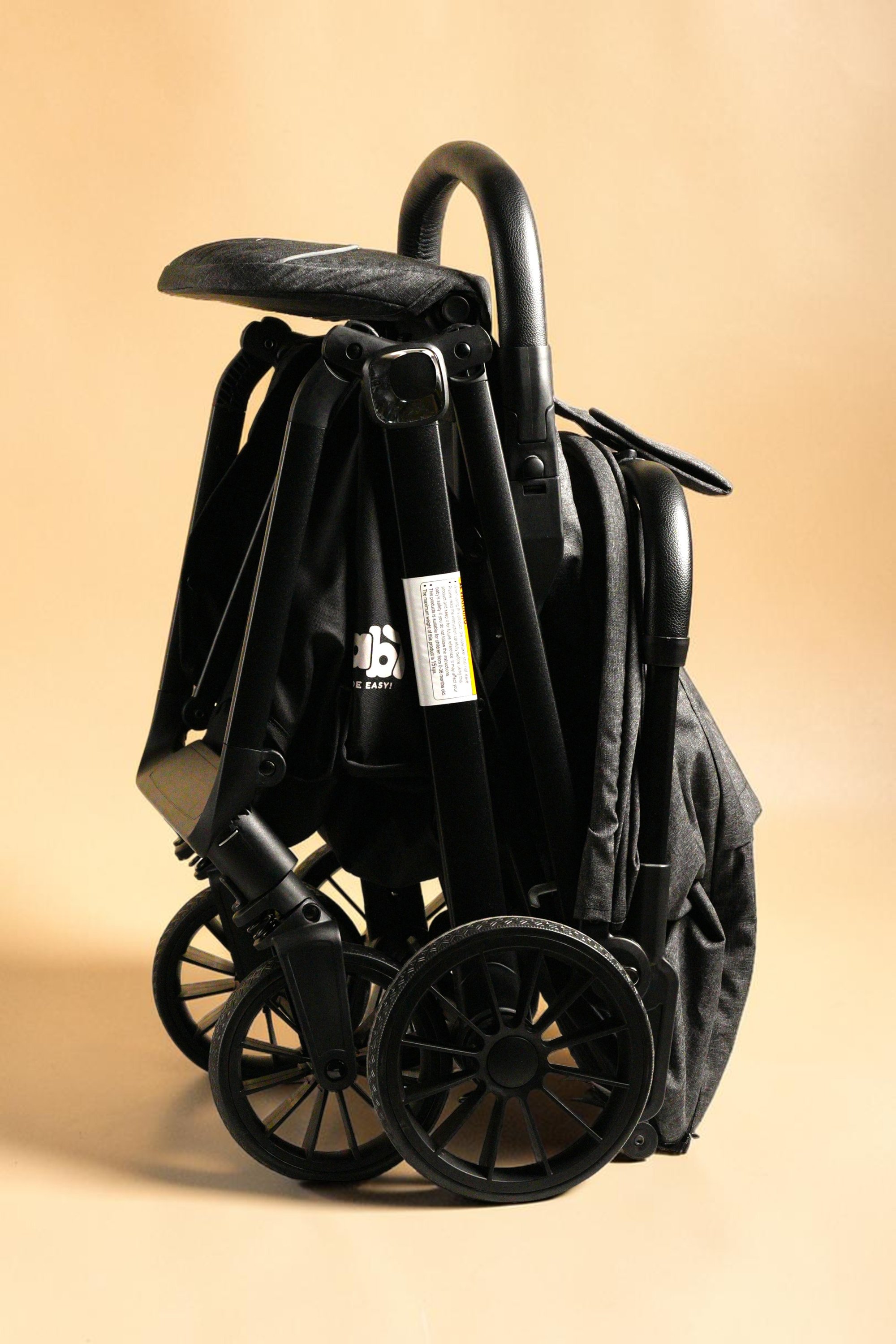
India’s monsoon is a stress test for everything: wooden furniture warps, leather shoes mould, and yes, baby strollers can rust, mildew, and stink within a single bad week. We tested four strollers through the Mumbai monsoon to figure out what actually works — and what damage to expect if you wing it.
Use a rain cover for any rain heavier than drizzle. After every wet outing: wipe the frame dry, hang the seat pad upside down to dry, and never store the stroller folded while damp. Aluminium frames don’t rust; powder-coated steel doesn’t either if the coating is intact. Inspect bearings and harness anchors monthly during monsoon.
Rain Covers — What to Look For
A rain cover is a clear PVC or TPU sheet that fits over the canopy and clips at the footrest. It seals baby in dry while you walk. Three things to check before buying:
- Ventilation panels. Solid PVC traps heat — baby will sweat in 5 minutes. Look for mesh or breathable side panels.
- Universal vs model-specific. Universal covers fit most strollers but flap in wind. Model-specific covers from your stroller brand fit tighter.
- Cabin canopy gap. Cheap covers leave a 2–3 inch gap at the canopy edge that lets rain blow in. Test the fit dry before buying.
The Hababy Ultra rain cover is included free with every stroller and has dual mesh panels at chest level.
Fabric Care & Drying
Stroller fabrics in India are typically 300D, 420D, or 600D Oxford polyester. Higher D = denser weave = more water-resistant. Most mid-range strollers use 420D, which sheds light rain but soaks through after 5–10 minutes of heavy rain.
How to dry stroller fabric properly
- Detach the seat pad and canopy if removable.
- Hang upside down in a well-ventilated room (NOT direct sun — UV fades color in hours).
- Run a pedestal fan across the surface for 2–3 hours.
- Once dry, spray a fine mist of fabric water-repellent (Scotchgard or similar — ₹450) every 4–6 weeks.
If the fabric smells musty after drying, you have early mildew. Wipe with a 1:5 white vinegar solution, dry again, then sun for 30 minutes. Don’t skip drying steps — mildew on stroller fabric is permanent.
Frame Rust Prevention
If your stroller frame is aluminium, you don’t need to worry about rust. If it’s powder-coated steel (most sub-₹5,000 strollers), here’s the routine:
- Wipe the frame fully dry within an hour of getting wet.
- Pay extra attention to the fold hinges, wheel axles, harness slots, and brake pedals — these are the spots where powder coat chips first.
- Apply silicone spray (₹120 a can) to fold hinges and brake mechanisms every 2–3 weeks during monsoon.
- If you spot a chip in the powder coat, dab clear nail polish or rust-prevention paint on it within a day.
Wheels and Bearings
Wheels collect grit and water during monsoon, and the bearings inside seize if not maintained. Once a month during monsoon:
- Pop the wheel caps if your stroller allows.
- Wipe the wheel hub and axle clean.
- Apply a single drop of light machine oil to each axle (3-in-One or sewing-machine oil).
- Spin the wheel by hand — should turn freely with light resistance.
Squeaky wheels mean your bearings need this treatment now.
Wet-Season Storage
Never store the stroller folded while any part is damp. Mildew sets in within 36 hours. If you can’t dry it the same day, leave it open in a dry room overnight before folding for storage.
For long-term monsoon storage (e.g., between baby outings during peak rain), open the stroller in a dry area, drape a thin cotton sheet over it (not plastic — plastic traps moisture), and store away from external walls that may sweat.
Monsoon Stroller Kit (₹1,500 Budget)
- Rain cover — ₹500–800 (free with most reputable strollers).
- Microfiber towel — ₹150. Carry in the basket for quick dry-downs.
- Silicone spray — ₹120. For fold hinges.
- 3-in-One oil — ₹90. For wheel bearings.
- Fabric water-repellent (Scotchgard) — ₹450. Apply once at start of monsoon, once mid-season.
FAQ
Can I use a baby stroller in the rain?
Yes — with a rain cover for anything heavier than drizzle.
How do I prevent my stroller from rusting in monsoon?
Wipe dry after every wet outing, apply silicone spray to hinges, dab nail polish on coating chips immediately.
Can I machine-wash stroller fabric?
Hand-wash cold only on most Indian strollers. Machine washing distorts foam padding.
How do I dry a stroller after rain?
Open fully, hang fabric in a ventilated room (not sun), run a fan for 2–3 hours.
Does the Hababy Ultra work in monsoon?
Yes. Water-resistant 600D Oxford fabric, powder-coated aluminium frame, included rain cover.