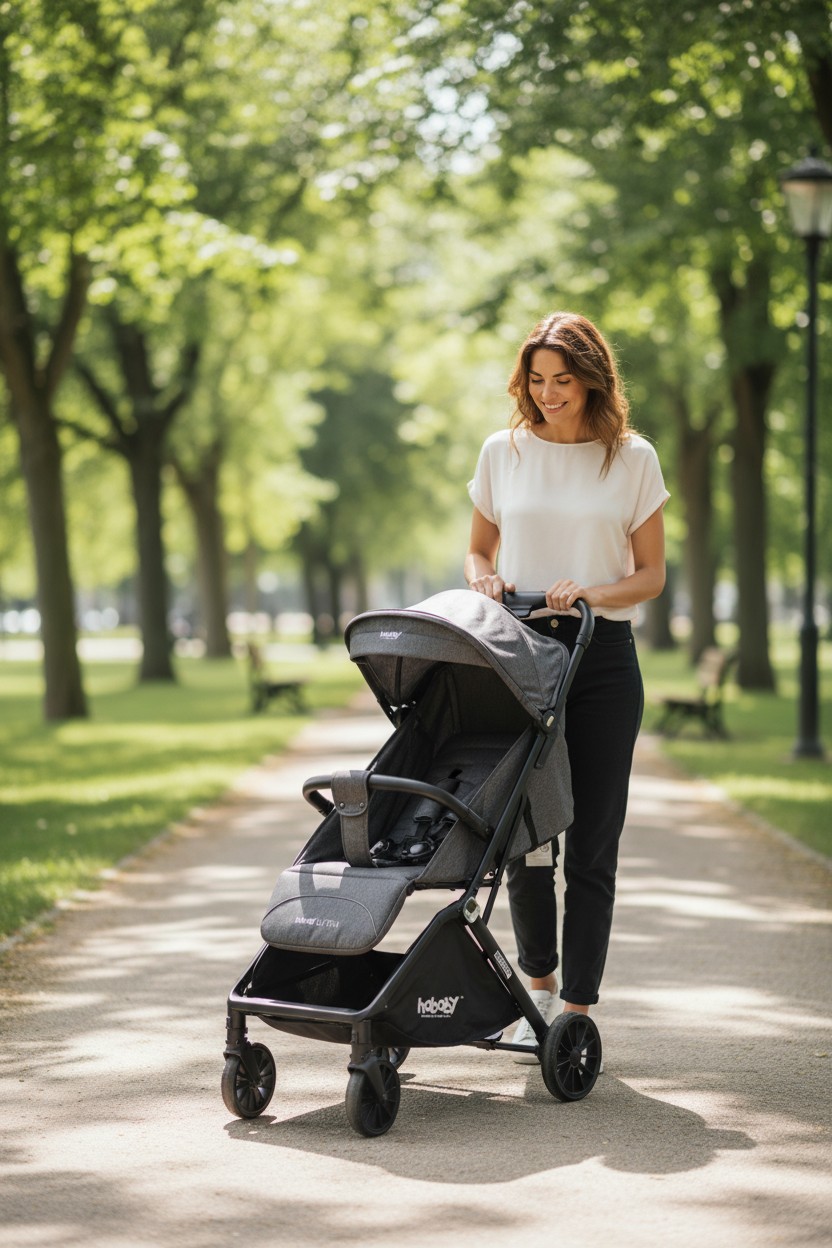
Travel systems — stroller frames that accept a clip-in infant car seat — are a US and European standard. In India, the calculation is different. Most urban Indian families don’t drive daily; they Uber, Ola, or have a driver. The car-seat-clip-into-stroller magic is wasted if you’re not actually using a car seat. This guide cuts through the marketing and tells you when a travel system is worth the extra money in India.
Buy a travel system only if you drive your own car at least 2–3 times a week. For families primarily using Uber/Ola or with a driver who doesn’t install car seats reliably, a standalone stroller is enough. Travel systems cost ₹13,500–₹42,000+; standalone premium strollers cost ₹7,000–₹15,000.
What Is A Travel System?
A travel system is two products designed to work together:
- A stroller frame with adapter mounts on the seat.
- An infant car seat (typically rear-facing, 0–13 kg) that clicks into both the car’s Isofix base and the stroller’s adapter mounts.
The intended workflow: baby falls asleep in the car. You arrive at destination. Lift the car seat (with sleeping baby) out of the Isofix base. Click it onto the stroller frame. Walk into the mall without waking baby.
Do You Drive Enough To Need One?
Honest threshold: 2+ trips a week in your own car, with you or your spouse driving. If you mostly Uber/Ola, the magic doesn’t work because you can’t reliably install an Isofix base in ride-share cars (most don’t support Isofix; seatbelt installation in ride-share takes 5–10 minutes per ride and is rarely done).
If you have a personal driver, a travel system can work — install the Isofix base permanently in your car, and the driver’s only job is to wait while you click the seat in.
Indian Car Compatibility
- Isofix-equipped cars in India: All cars sold post 2018 by Maruti Suzuki (top variants), Hyundai (Creta, Verna, Venue), Tata (Nexon, Harrier, Safari), Mahindra (XUV300, XUV700), Toyota (Innova, Fortuner, Camry), Kia, Honda (City), and most premium imports. Lower variants of base hatchbacks may not have Isofix — check with the dealer.
- Seatbelt-installed car seats: Work in any car but require correct routing through the seat’s belt path. Easier to install incorrectly. We recommend Isofix where available.
Travel Systems Available in India
- R for Rabbit Picaboo + Throne — ₹13,500. Most affordable travel system in India.
- Chicco Bravo + KeyFit 30 — ₹38,000+. Imported. Well-built; service via licensed importer.
- Graco Modes Click Connect — ₹42,000+. Imported via FirstCry.
- Maxi-Cosi Pebble + Mura — ₹52,000+. Premium European import.
Why A Standalone Often Wins For Indian Families
Travel systems are designed for the “don’t wake the sleeping baby” problem. In Indian families with grandparents at home, a flat couch, and frequent feed-and-change cycles, this problem is smaller than the marketing suggests — you usually pick baby up anyway. A standalone stroller plus a separate, well-installed car seat solves the safety problem without the bundled cost.
Math: Hababy Ultra (₹7,999) + a separate Britax/R for Rabbit infant car seat (₹6,500) = ₹14,500. A travel system at the same total cost gives you a less specialised stroller and a less specialised car seat.
If You Only Need A Car Seat
For Indian families who’ll only use a car seat occasionally (driver-driven, weekend trips), buy:
- R for Rabbit Jack N Jill — ₹6,500. Convertible 0–7 yrs.
- Britax B-Safe 35 — ₹14,000. Imported infant-only.
- Chicco NextFit Zip — ₹28,000. Premium convertible.
Pair any of these with a standalone stroller of your choice.
FAQ
What is a travel system stroller?
A stroller frame plus an infant car seat that clicks between car and stroller without waking baby.
Are travel systems necessary in India?
Only if you drive your own car at least 2–3 times a week.
Do Indian Uber/Ola drivers allow car seats?
Officially yes, practically inconsistent. Plan for hassle.
Is a car seat mandatory for babies in India?
Yes under MVA 2019, though enforcement is rare. Use one regardless — it cuts infant fatality risk 71%.
Cheapest travel system in India?
R for Rabbit Picaboo + Throne at ~₹13,500.