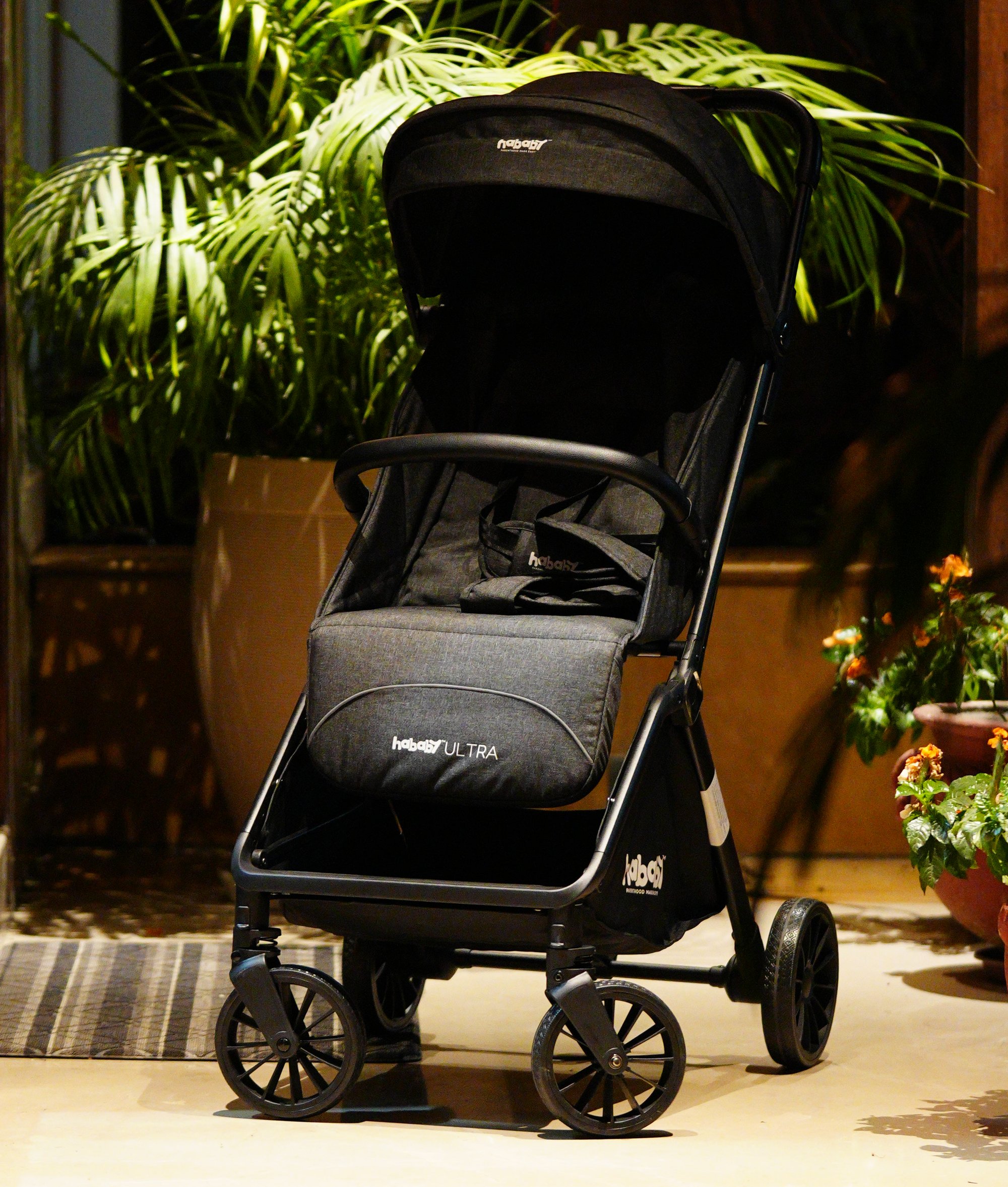
There’s no fixed age at which a child should stop using a stroller, but most paediatric guidance points to ages 3–4 for the daily transition and ages 4–5 as the upper limit even for occasional use. The right answer for your child depends on physical development, social context, and your family’s travel patterns. This guide is the practical Indian-parent answer.
By age 3, most children should be walking the majority of short daily outings, with the stroller used only for long distances or tired moments. By age 4–5, even occasional stroller use should taper. The upper structural limit of most strollers (15–22 kg) is reached around age 4 anyway.
Age-By-Age Developmental Milestones
0–6 months
Stroller is essential. Baby cannot walk and may not yet have reliable head control — flat-recline pram or stroller is the only option.
6–12 months
Baby is sitting up, but cruising or walking is just emerging. Stroller is still the default for outings.
12–18 months
Most toddlers are walking by 15 months. Start short walks (50–100 m) on each outing with stroller as backup.
18–24 months
Toddlers should walk part of every outing — 100–300 m at a time. Stroller for longer distances and tired moments.
2–3 years
Walking is the default for short distances. Stroller for distances over 500 m or after activity.
3–4 years
Stroller use tapers to occasional — airports, theme parks, long shopping trips. Daily use is no longer developmentally appropriate.
4+ years
Stroller is for travel-day backup only. Most children of this age refuse strollers anyway, except when very tired.
Signs Your Child Is Ready To Walk More
- Asks to get out of the stroller mid-outing.
- Walks confidently without holding on for 200+ m.
- Refuses the stroller for known short routes.
- Energy level remains high after 30 min of walking.
- Approaching the weight limit of the stroller.
When It’s OK To Keep Using One
- Long-distance days — airports, theme parks, malls. Even 4–5 year olds need a sit-down option.
- Sensory-sensitive children — the stroller is a calming “safe space” for some kids.
- After long activity — if the stroller is the difference between getting home calmly and a tantrum, use it.
- Younger sibling shared — sit-and-stand strollers work for the older child while the younger sibling rides.
How To Transition Smoothly
- Make walking the default. Start outings on foot; the stroller is the “rest tool,” not the “go tool.”
- Predictable rest stops. Promise “walk to the next bench, then we’ll rest.”
- Carry the stroller, don’t roll it empty. If the child sees an empty stroller, they’ll ask to ride. Folded over your shoulder, it disappears.
- Phase out gradually. Three months from daily-use to weekend-only is realistic.
- Praise walking. Acknowledge “you walked the whole way!” — reinforces autonomy.
Weight-Limit Reality
The structural limit of your stroller decides the absolute maximum age. Most Indian strollers are rated for 15–22 kg. The 50th-percentile Indian child weight by age:
| Age | Weight (50th %ile) | Stroller Status |
|---|---|---|
| 2 yr | 11.5 kg | Comfortable |
| 3 yr | 13.5 kg | Approaching limit |
| 4 yr | 15.5 kg | At 15kg-rated limit |
| 5 yr | 17.5 kg | Over most stroller limits |
If your stroller is rated 15 kg and your 4-year-old is 15+ kg, the frame will eventually fatigue. Time to retire it.
FAQ
What age should a child stop using a stroller?
Daily use ends around age 3; occasional use tapers by age 4–5.
Is it OK to use a stroller for a 4-year-old?
For long distances, yes. Daily, no.
Stroller weight limit?
15–22 kg depending on model.
My 4-year-old still wants to ride?
Use it as a rest tool, not the default.
When should toddlers walk on their own outdoors?
From 18 months, walk part of every outing.